
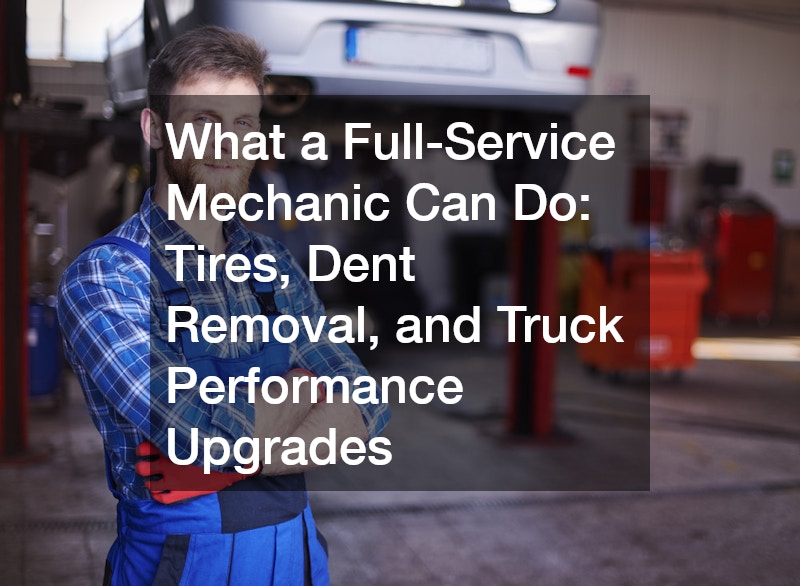
In the modern era of automotive ownership, the relationship between a driver and their service provider has evolved. Gone are the days when you needed a different specialist for every minor hiccup—one for the engine, another for the body, and a third for the glass. The rise of the comprehensive automotive center has streamlined the ownership experience, allowing for a more holistic approach to vehicle health. When a single team of experts understands the entire history of your vehicle, from its mechanical quirks to its aesthetic maintenance, the result is a safer, more reliable, and more enjoyable driving experience.
Maintaining a vehicle today is about more than just keeping it running; it is about preserving its value and tailoring its capabilities to your specific lifestyle. Whether you are commuting through urban traffic, hauling heavy loads for work, or heading off-road for weekend adventures, understanding the full range of services available to you is the first step in becoming a more informed and proactive owner. This guide explores the intricate layers of modern automotive care, offering technical insights and practical tips to help you navigate the complexities of contemporary vehicle maintenance and customization.
The Foundation of Safety: Traction and Emergency Readiness

The most critical interface between your vehicle and the road is the small contact patch of rubber beneath your wheels. While many drivers view tire maintenance as a simple matter of checking air pressure, a full-service facility views it as a diagnostic window into the vehicle’s overall health. Uneven wear patterns, for instance, are rarely just a problem with the rubber itself; they often point toward underlying alignment issues or worn suspension components that require immediate attention.
Choosing the right tires involves balancing several factors:
- Compound Density: Softer compounds provide better grip in cold weather but wear down rapidly on hot summer asphalt.
- Tread Pattern: Deep grooves are essential for water displacement to prevent hydroplaning, while tighter patterns offer a quieter, more fuel-efficient ride on dry highways.
- Load Rating: For those who use their vehicles for work, ensuring the sidewall can support the maximum weight of the vehicle is a non-negotiable safety requirement.
- TPMS Calibration: Modern vehicles rely on Tire Pressure Monitoring Systems that require professional recalibration whenever sensors are replaced or wheels are rotated to ensure accurate dashboard readings.
Beyond the daily commute, every driver must have a plan for when things go wrong. Unexpected mechanical failures or accidents can leave you stranded in dangerous locations. A high-quality shop often partners with or provides a dedicated tow service to ensure that if your vehicle becomes immobilized, it is transported directly to a facility that already knows its mechanical history. This integration reduces the stress of an emergency and ensures that the diagnostic process begins the moment the vehicle arrives at the shop.
Restoring Form and Function: Bodywork and Collision Recovery
The exterior of a vehicle is its first line of defense against the elements, but it is also the most susceptible to damage. Even the most careful drivers will eventually encounter the frustration of a shopping cart dink or a hail storm. Modern techniques in auto dent removals have revolutionized how we handle these minor imperfections. By using specialized tools to massage the metal back into its original shape from the inside out, technicians can often clear away damage without the need for sanding or repainting, preserving the factory finish and the vehicle’s resale value.
However, when damage moves beyond the cosmetic and into the structural, the complexity of the repair increases significantly. After an accident, the integrity of the “crumple zones” and the alignment of the chassis are the primary concerns. Professional auto collision repairs involve using laser-guided measuring systems to ensure the frame is straightened to within a fraction of a millimeter of its original specifications.
Key steps in the collision recovery process include:
- Structural Scanning: Identifying hidden cracks or bends in the high-strength steel frame that aren’t visible to the naked eye.
- Paint Matching: Using computerized spectrometers to match the exact fade and hue of your existing paint for a seamless finish.
- Safety System Recalibration: Ensuring that airbags, sensors, and cameras are reset and functioning perfectly before the vehicle returns to the road.
Protecting the View: Glass Integrity and Preservation

Visibility is the cornerstone of defensive driving. Small chips in a windshield might seem like minor nuisances, but they represent a compromise in the structural integrity of the glass. In modern vehicles, the windshield is actually a stressed member of the car’s structure, helping to support the roof in the event of a rollover. This is why car window repairs should never be delayed. A small pit can quickly spider-web across the entire surface due to temperature changes or road vibrations, turning a simple resin-fill job into an expensive full replacement.
Once the structural elements are secured, the focus often shifts to the preservation of the vehicle’s “as-new” feeling. Environmental contaminants like bird droppings, tree sap, and road salt can eat through clear coats in a matter of weeks. Comprehensive car detailing services provide a level of protection that goes far beyond a standard car wash. This includes clay bar treatments to remove embedded grit, machine polishing to eliminate swirl marks, and the application of ceramic coatings that create a hydrophobic barrier against the elements.
To maintain your vehicle’s appearance between professional visits, consider these tips:
- Avoid Automatic Brushed Washes: The stiff bristles can act like sandpaper, creating micro-scratches in your clear coat.
- Dry with Microfiber: Using old bath towels can cause linting and scratches; high-quality microfiber is designed to lift water without friction.
- Condition the Seals: Use silicone-based conditioners on window and door seals to prevent them from drying out and cracking, which leads to wind noise and leaks.
Elevating Utility: Enhancements for the Modern Truck
For many owners, a vehicle is a tool that needs to be sharpened for specific tasks. This is particularly true in the world of trucks and SUVs, where the factory settings are often a “best-fit” compromise for the average driver. One of the most common modifications is the installation of an auto lift. Whether you are looking for a simple leveling kit to even out the “nose-down” rake of a factory truck or a full suspension lift to clear 35-inch tires, these modifications change the center of gravity and the handling dynamics of the vehicle.
When you raise a vehicle, you also increase the difficulty of entering and exiting the cabin. This is where a pickup truck running board becomes an essential addition. These aren’t just for convenience; they also serve as a buffer against road debris kicked up by larger tires, protecting your rocker panels from stone chips.
When planning these utility upgrades, keep the following in mind:
- Geometry Correction: Lifting a vehicle changes the angle of the driveshaft and CV axles. A professional shop will ensure these angles are corrected to prevent premature wear.
- Braking Power: If you install significantly larger wheels and tires, your factory brakes have to work harder. Consider upgrading your pads and rotors to compensate for the extra rotating mass.
- Step Selection: Choose steps with a high-traction surface, especially if you live in a climate with frequent rain, snow, or mud.
Engineering Excellence: Tuning and Professional Oversight

The heart of any vehicle is its powertrain, and for those who demand more than the standard output, the world of performance tuning offers endless possibilities. These truck performance upgrades are designed to unlock the latent potential within the engine and transmission. By optimizing the air-to-fuel ratio and increasing the efficiency of the exhaust path, a technician can provide a vehicle with more torque for towing, better throttle response for merging, and often improved fuel economy under steady-state cruising.
However, these modifications should never be performed in a vacuum. Every change to the engine’s output puts additional stress on other components, which is why having a trusted mechanic oversee the build is vital. They can ensure that your cooling system, transmission, and differential are all capable of handling the increased power. A professional build is a balanced build; it is about making the vehicle faster and stronger without sacrificing the reliability that you depend on for your daily life.
Professional oversight for performance builds usually involves:
- Data Logging: Monitoring the engine’s “vital signs” during a test drive to ensure temperatures and pressures remain within safe limits.
- Fluid Analysis: Checking for metallic shavings or chemical breakdown in the oil after modifications to catch potential issues early.
- Thermal Management: Upgrading auxiliary oil coolers and larger radiators to dissipate the extra heat generated by high-performance engine mappings.
- Incremental Progress: Starting with “bolt-on” modifications like cold air intakes before moving to more invasive changes like turbocharger upgrades or internal engine work.
Long-Term Maintenance Strategies
While upgrades and restorations are exciting, the longevity of a vehicle is determined by the consistency of its basic care. A full-service shop excels here by maintaining a unified service record. Instead of wondering when the spark plugs were last changed or if the coolant has been flushed, you have a digital paper trail that informs every decision. This proactive approach allows you to “stack” services, such as performing a brake inspection while the wheels are already off for a rotation, saving you both time and labor costs.
A successful maintenance strategy involves:
- Predictive Replacement: Swapping out components like water pumps or timing belts based on mileage intervals before they fail and cause catastrophic engine damage.
- Seasonal Inspections: Checking battery health before winter and air conditioning performance before the summer heat hits.
- Fluid Management: Monitoring the pH level of your brake fluid and the viscosity of your transmission oil to ensure they haven’t been compromised by moisture or heat.
- Sustainability: Proper disposal and recycling of used oils, filters, and batteries not only protect the environment but also ensure your shop is operating under the latest regulatory standards.
- Software Updates: Many modern vehicles rely on complex computer modules that require periodic firmware updates to fix bugs and improve efficiency—something only a well-equipped shop can provide.
The value of a full-service provider lies in their ability to see the “big picture.” They don’t just see a broken part; they see a system. They understand that a vibration in the steering wheel could be a tire balance issue, a bent rim from a previous collision, or a failing power steering pump. By addressing the root cause rather than just the symptom, they ensure that the repair lasts and the vehicle remains a dependable asset.
Navigating the Costs of Quality Care

It is a common misconception that a full-service facility is always more expensive than a “budget” alternative. In reality, the cost-effectiveness comes from the reduction in “re-work.” When a job is done correctly the first time using high-quality parts and expert labor, the total cost of ownership over the life of the vehicle actually decreases. Furthermore, a well-maintained vehicle with a documented service history from a reputable shop commands a significantly higher price on the secondary market. Buyers are often willing to pay a premium for a car that has spent its life under the watchful eye of a single, professional team.
To get the most value out of your service visits:
- Ask for an Itemized Estimate: Understand exactly what you are paying for, from parts and labor to shop supplies.
- Prioritize Safety: If your budget is tight, ask the technician to categorize repairs into “immediate safety concerns” and “items that can wait 3,000 miles.”
- Establish a Relationship: Frequent customers often receive better scheduling priority and more thorough “peace of mind” inspections during routine visits.
- Warranty Awareness: Ensure that any installed performance parts or major repairs come with a labor and parts warranty, protecting your investment if a component fails prematurely.
- Value Retention: Keep a physical folder of all receipts and digital reports; this “logbook” is as valuable as the keys themselves when it comes time to trade-in your vehicle.
In conclusion, the modern vehicle is a masterpiece of engineering, a complex blend of mechanical power, electronic sophistication, and aesthetic design. Caring for such a machine requires a partner who is equally multifaceted. By leveraging the expertise of a comprehensive service provider, you transition from being a passive driver to an active steward of your vehicle’s legacy. Whether you are restoring a classic, maintaining a daily driver, or building a high-performance machine, the path to automotive success is paved with professional expertise and proactive care. Investing in your vehicle today ensures that it will continue to serve you faithfully for many miles to come.